It’s always interesting to talk with an intelligent man
When I read American Psycho in preparation for a course on neoliberalism that I never took, I couldn't finish it - it was too fucked up. Less Than Zero, like American Psycho, is all about shock: it's full of beautifully descriptive lines that you pass over and then you wait a beat and go––sorry, what?
The dog puts the cigarette out with its paw and then eats it.
Rip comes over, after talking to the gay porno star who's sitting at the bar with his girlfriend
"An old woman, holding an umbrella, falls to her knees on the other side of the street."
'Mom, tell him to answer me. Why do you lock your door, Clay?'
I turn around. 'Because you both stole a quarter gram of cocaine from me last time I left my door open. That's why.'
My sisters don't say anything.
This literary jump-scare reaches its apogee in American Psycho:
"The bum's not listening. He's crying so hard he's incapable of a coherent answer. I put the bill slowly back into the pocket of my Luciano Soprani jacket and with the other hand stop petting the dog and reach into the other pocket. The bum stops sobbing abruptly and sits up, looking for the fiver or, I presume, his bottle of Thunderbird. I reach out and touch his face gently once more with compassion and whisper, "Do you know what a fucking loser you are?" He starts nodding helplessly and I pull out a long, thin knife with a serrated edge and, being very careful not to kill him, push maybe half an inch of the blade into his right eye, flicking the handle up, instantly popping the retina."
Ellis writes novels like the first half of The Wolf Of Wall Street - some part of you is envious of the characters, even if they're fucked up and evil. They're better than you; they have more fun than you; they do stuff (drugs, women) you'll never get to do. Some people question whether these people are real––that's moronic. These people are real, and you can meet them, and if you're the right person, you can be them too.
People like to say that Ellis is drawing on Dostoevsky, but nobody wants to be in a Dostoevsky novel. I read the Joan Anderson Letter, which inspired Kerouac, the other day, and Less Than Zero is much more like that than . Whatever the Beats were complaining about, they had a good time doing it.
The specificity with which he names drinks, drugs, TV channels, streets, and shops is part of the fun, although in Less Than Zero Ellis isn't yet doing the long descriptive passages about consumer goods; those only appear in American Psycho.
I think the book's signature move, though, is the callback - casually mentioning something that was first introduced earlier in the novel, and then immediately moving on. It's anacoluthon: interrupting the narrative to tie it all together, swaddling the novel the way a pre-literary poet uses alliteration and stock epithets to bind the verses. There are repeated references to __things__––Duran Duran; The Colony; models of Mercedes named without mentioning the marque; anorexia––but the callbacks are more conceptual. The first line in the book is one of them: "people are afraid to merge." The Temple of Doom bootleg. Scary billboards - "Disappear Here", or a giant skull.
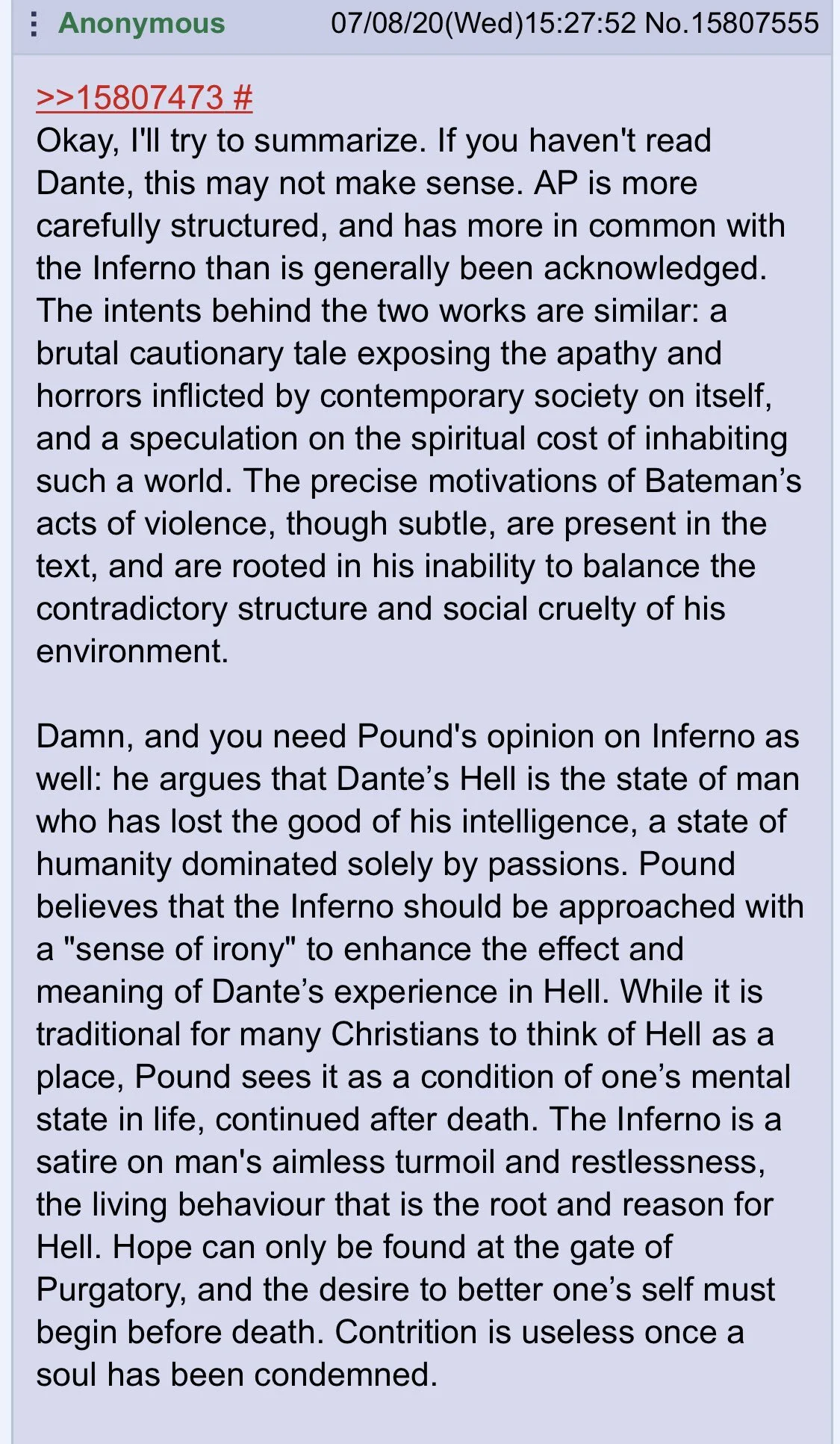
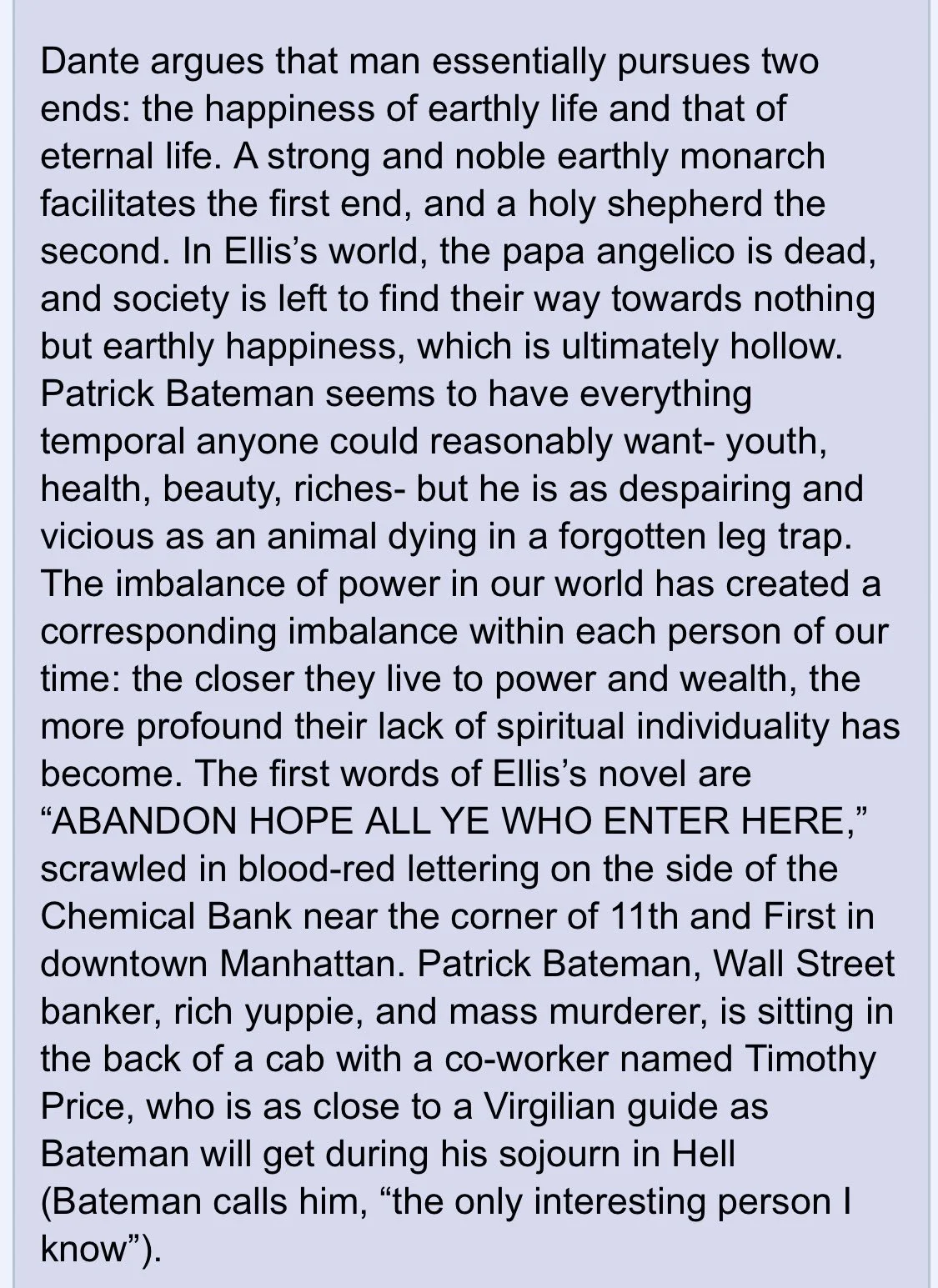
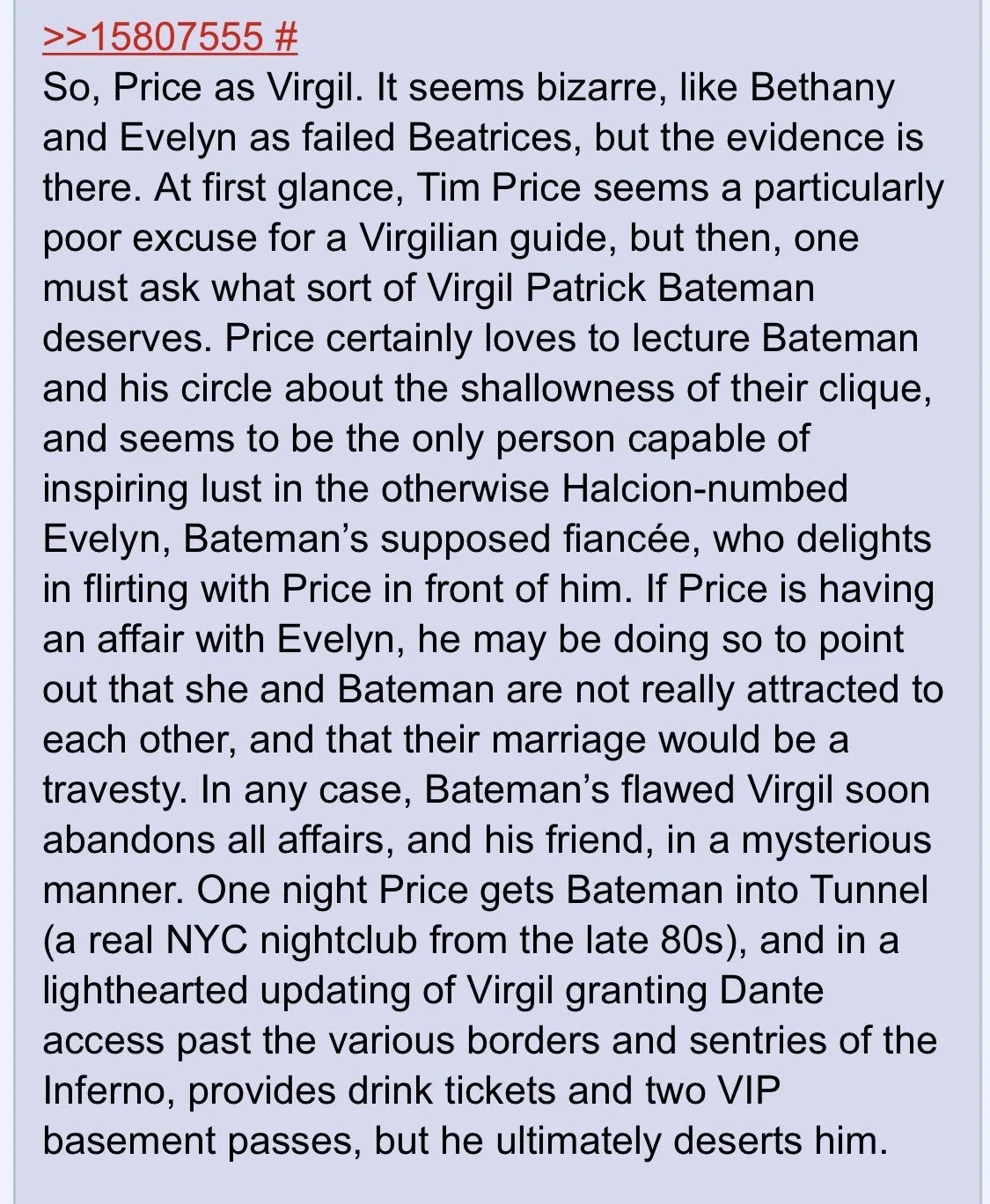
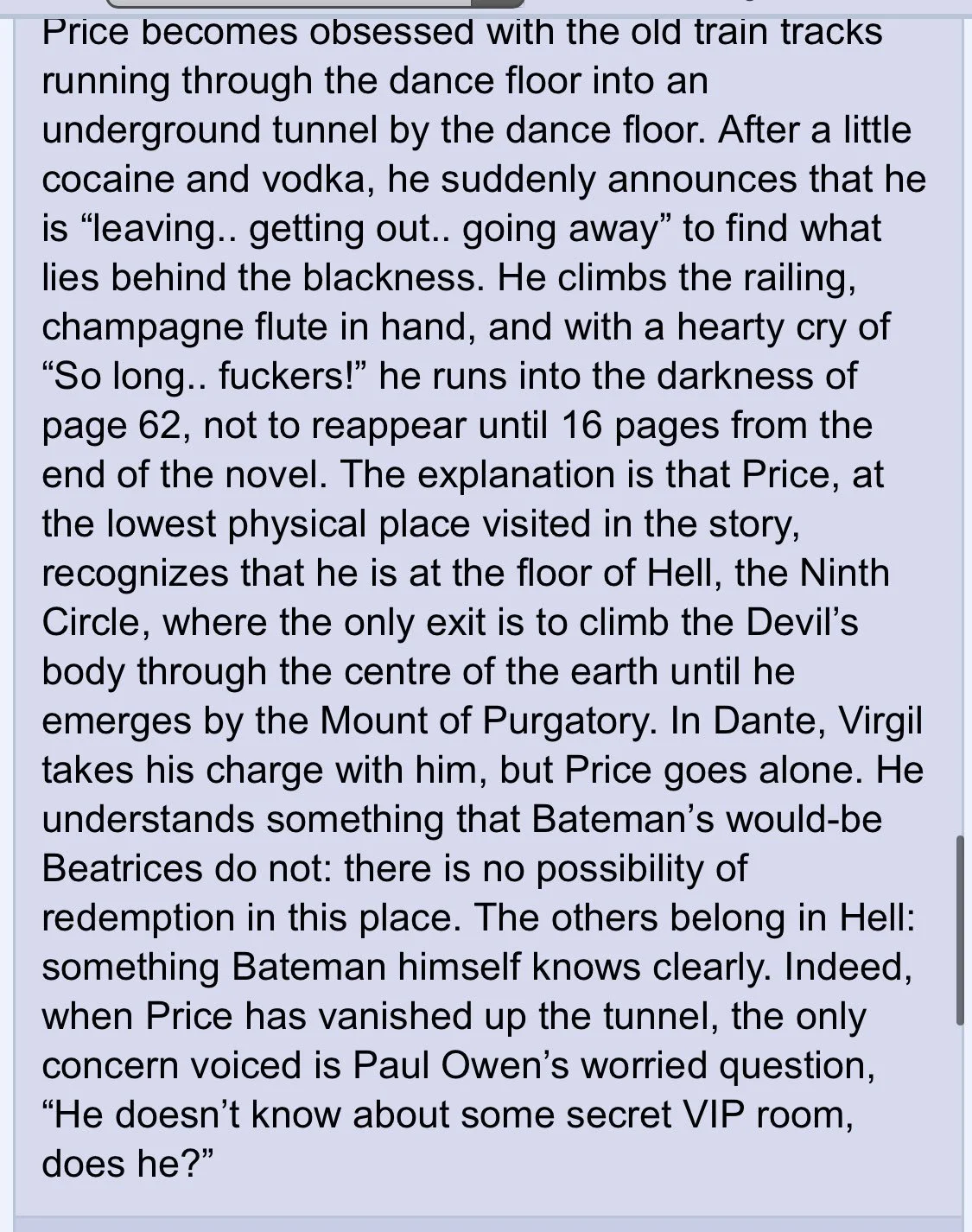
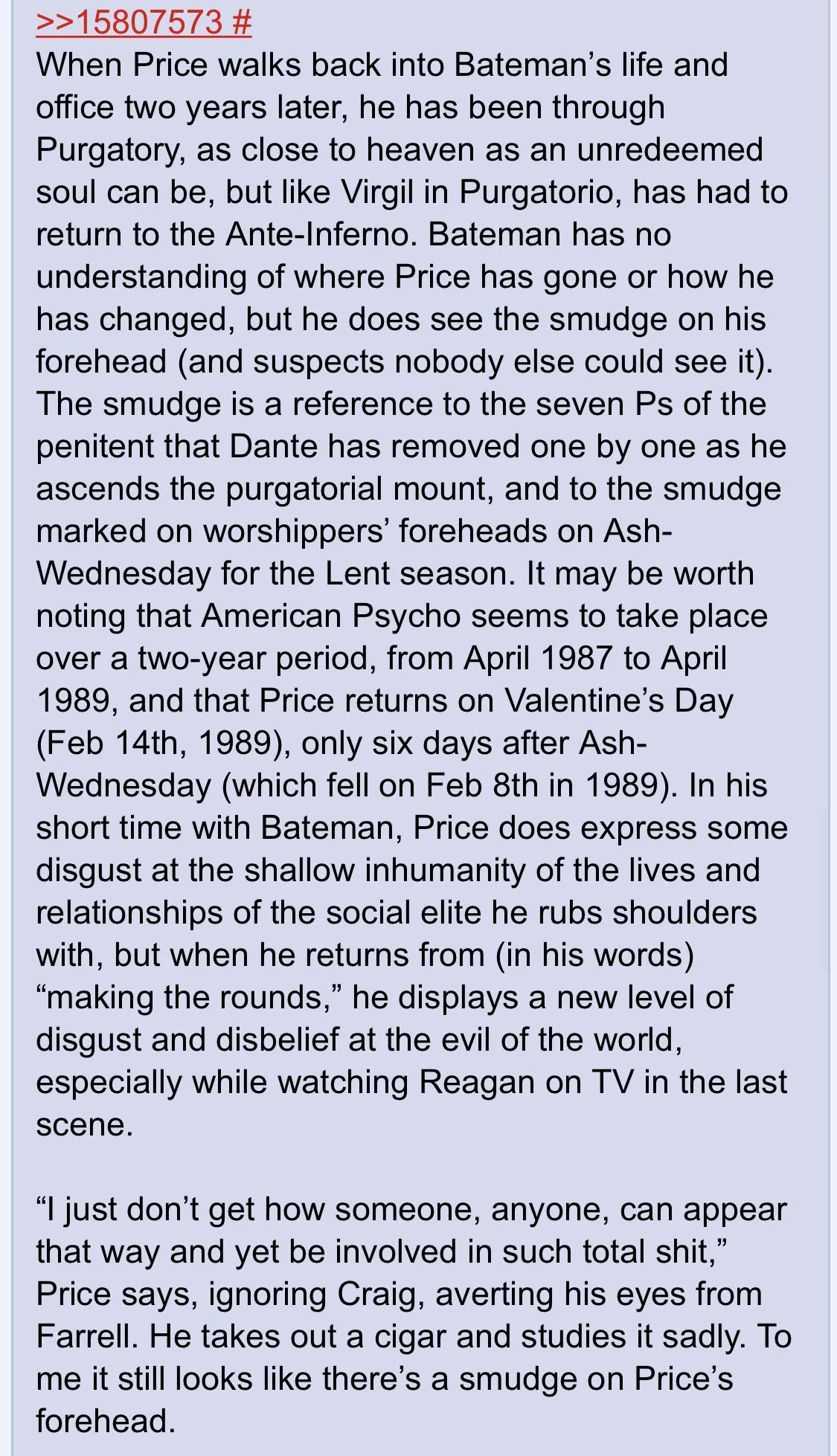
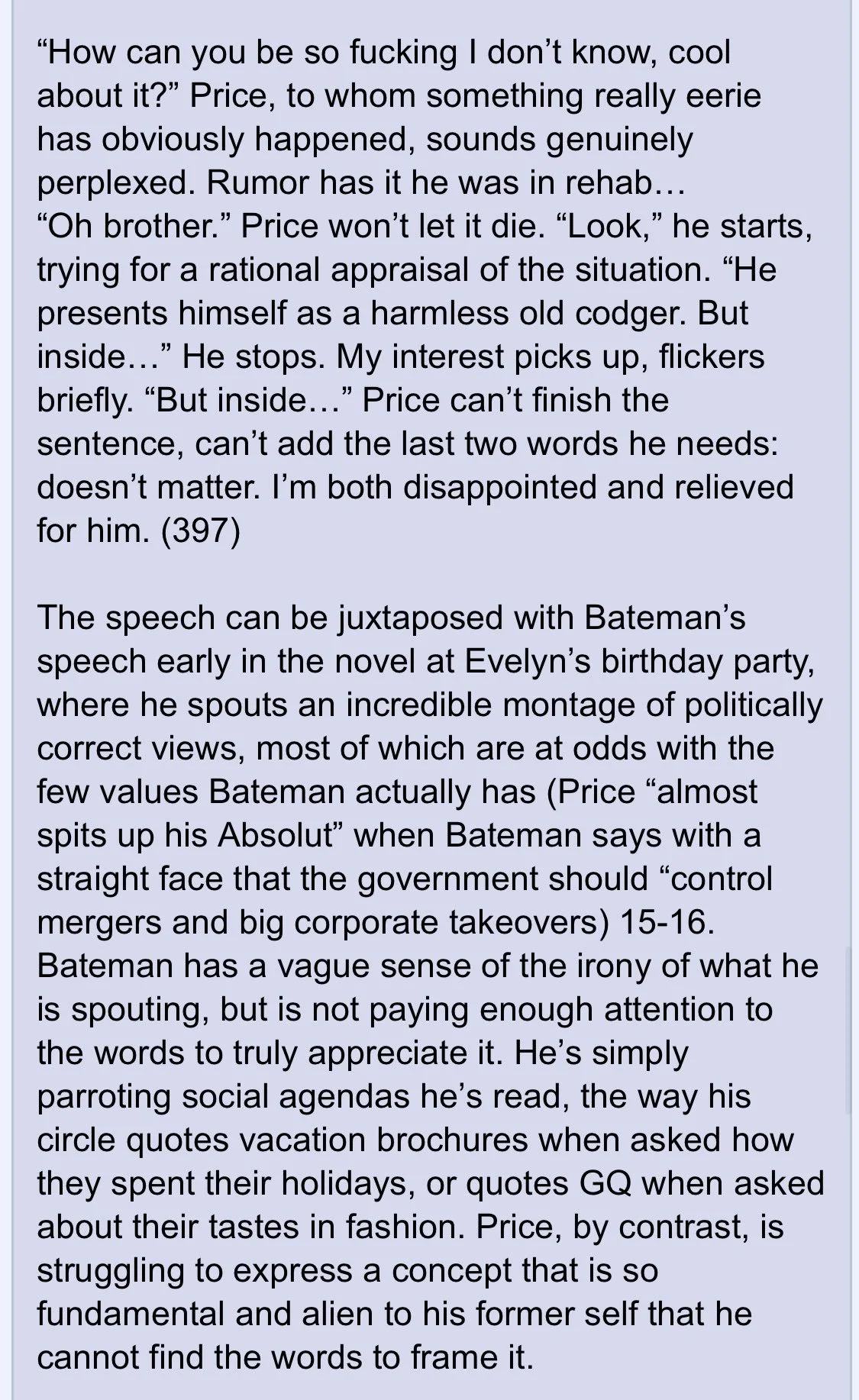
Much of what I've written on this blog is an attempt to reach the kind of freebased associativity displayed by this 4chan post about American Psycho and Dante; I hope that sharing it here will help save it from the anonymity of the deep Internet.