Molly’s Game
Molly Bloom played her game all wrong.
Molly was extraordinarily gifted; fabulously beautiful; she was in the right place at the right time; she was brilliantly Machiavellian on occasion. Everyone wanted to be at her table: she told jokes, and she wore many faces. Even at her lowest, powerful people helped her, even when there was nothing in it for them. She was better than you at almost everything that matters. And she’s still fucking poor.
To recap: Molly Bloom finds herself working as a receptionist, personal assistant and cocktail waitress for a greasy arsehole who runs a secret poker game for Hollywood stars. Famous actors come to her boss’s game, and Molly handles the admin. Eventually, her boss gets jealous, and tries to fire her; in response, she sets up her own game, stealing his clients. She runs it well, and more powerful people join: movie stars, hedge fund managers, eventually the Russian mafia. Her operation is bigger and more exclusive than anyone else’s.
Molly was paid in tips; hundreds, sometimes thousands of dollars, enough to cover her costs with a little left over. But as her blinds increased, she started to take on credit risk. To cover that credit risk, she started to take a rake, which was illegal under New York Article 225. This violation of state law made her liable for federal prosecution under the 1970 Illegal Gambling Businesses Act. Molly made a few million dollars from this rake - and then she was arrested by the FBI.
Does this sound like a good business plan to you? Assemble a circle of rich and powerful men, become their trusted confidant - and monetise that by doing something 1. super illegal and 2. not very profitable? Something that scales at best linearly with the size of the game, with no shot at massive upside? Molly Bloom had, let me be clear, zero shot at becoming a billionaire from her game. She turned a tactical victory (owning the game) into a strategic defeat, condemning herself to becoming a friendly concierge, a consigliere deputised to facilitate some of the more depraved impulses of her clients, constantly made to feel inferior by comparison - and in the end, she was basically guaranteed to go to prison.
Most people never achieve her initial tactical victory; they’ll never assemble a client base like that; but Molly needed a much better plan for parlaying those clients into generational wealth.
One of her clients did a little better. ‘Bad Brad’
persuades his fellow players that he’s bad at poker
gains their trust and sympathy
persuades them to invest in his hedge fund - which unfortunately turns out to be a Ponzi scheme.
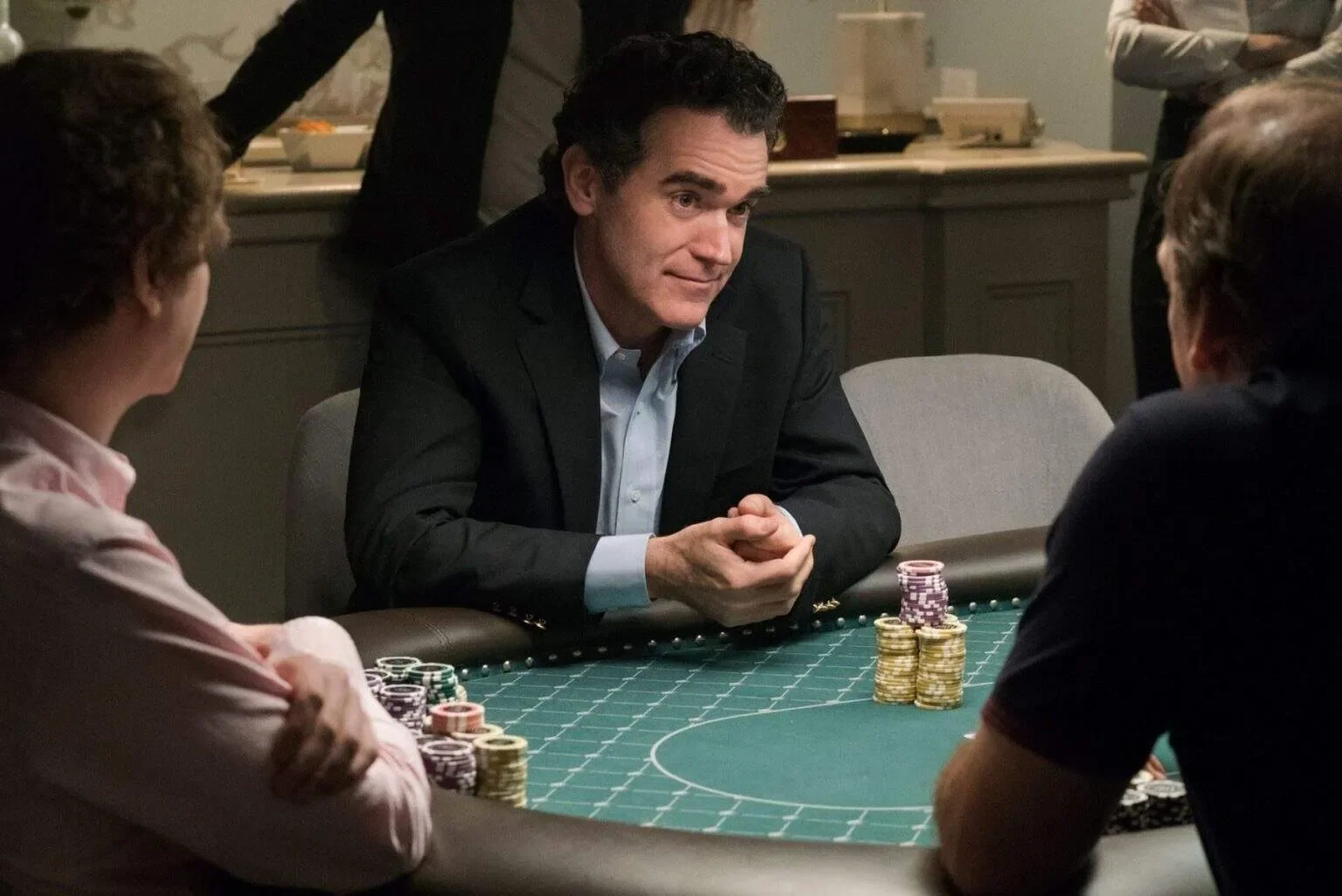
our hero, losing money
To be clear, I’m not condoning the Ponzi scheme. It also seems like Brad lost millions of dollars at the table - possibly more than he gained in LP commits. But if you find yourself running a legitimate hedge fund, making wealthy friends at poker night and turning those friends into LPs could be a smart move.
Molly could have been a travel agent, a party planner, a school admissions counsellor, a realtor, an art dealer, a movie agent; she could have raised funds, recruited talent, run lobbying campaigns; all the above! None of these moves would have been easy, but they’re legal ways to make much more money than she did by taking a rake! The film is a morality tale: how do you intend to capture the value you create?
Today, we are faced with the greatest economic disruption in the history of humanity.
Imagine, for a moment, that you’re a Russian in 1990; perhaps you have some education, some connections, even some experience in the security apparatus. The economy is opening up. What should you do?
Maybe you’ve heard of Yeltsin’s visit to a Houston grocery store; maybe you realise that actually, your home town could use a grocery store, and maybe the next town over could too. And maybe that business works, and you do indeed capitalise on the post-Soviet economic boom. And one day, you’ll open a newspaper and read about Roman Abramovich buying Chelsea, and the magnitude of your folly will be revealed to you in a blinding flash.
Because when you’ve already done the hard bit, when you’re already in the right place at the right time and you’ve assembled a client base of the rich and powerful, asking them for tips is easy. When you’re well positioned in post-Soviet Russia, making a few roubles is easy. But if you fail to capitalise on opportunities like this one, you’ll end up like Molly Bloom - regretting what could have been.
What are you doing in this time of great need?